How to Keep Your Garage Cool Enough to Work In
A 95-degree day outside means your garage is sitting at 120 to 130 degrees inside. That is not a typo. Uninsulated garages with concrete floors and dark-colored doors absorb heat all day and hold it like an oven. And if you have spent thousands on a lift, flooring, and storage to build your dream workspace, watching it sit empty from June through September because you can't stand to be in there for more than ten minutes is a real problem.
Most of the advice online about garage cooling boils down to "open a window" or "buy a fan." That is not going to cut it when you are doing a brake job in August.
Here is what actually works.
Why Your Garage Gets So Hot
Your garage was not designed to be comfortable. It was designed to park cars. The walls are usually uninsulated single-layer drywall or bare studs. The ceiling is either open rafters or a thin sheet of plywood. The garage door is a single layer of steel that turns into a griddle by noon.
All that surface area absorbs solar radiation and radiates it inward. Add a concrete slab that has been baking since sunrise, and you have a room that stays 10 to 18 degrees hotter than the outside temperature. Park a car that just drove home on hot asphalt and you can add another 5 to 10 degrees on top of that.
So before you buy any cooling equipment, you need to deal with the heat sources first.
Start With Insulation
This is the single highest-impact thing you can do. Insulating your garage walls and ceiling cuts indoor temps by 10 to 20 degrees on its own, and it makes every other cooling method work better.
Walls: R-13 fiberglass batts between the studs, covered with drywall or OSB. Cost is around $1.50 per square foot for materials. A standard 2-car garage has roughly 500 square feet of wall space, so you are looking at $750 in materials for a weekend project.
Ceiling: R-30 or R-38 batts if you have attic space above. This is where the most heat enters. Hot attic air can reach 150 degrees and that heat radiates straight through your ceiling.
Garage door: Insulation kits run $100 to $200 per door. They are foam panels that stick to the inside of each door panel. They won't turn a steel door into a wall, but they help, and they are a 30-minute install.
Don't skip this step. Blasting a fan or cooler into an uninsulated garage is like running your car's AC with the windows down.
Ventilation Matters More Than You Think
Moving hot air out and pulling cooler air in is the cheapest active cooling method. But "open the garage door" is not a real ventilation strategy, especially if it is 100 degrees outside.
Exhaust fans mounted high on a wall or in the ceiling pull hot air out of the space. Heat rises, so pulling from the highest point is key. A 1,400 CFM wall-mount exhaust fan costs around $200 and moves a serious amount of air.
Intake vents low on the opposite wall create cross-flow. Hot air exits high, cooler air enters low. This temperature differential drives natural convection even when the exhaust fan is off.
The trick most people miss: run your exhaust fan for 20 minutes before you start working. Clear the stale hot air first, then switch to your primary cooling method. That initial purge makes everything else more effective.
Fans Are Not Enough (But They Help)
A big 42-inch drum fan moves a lot of air and costs about $250. It will make you feel cooler through evaporation, the same way a breeze does. But it is not actually lowering the temperature. It is just moving 120-degree air across your skin faster.
Fans work best as a supplement to other cooling methods, not as the primary solution. If your garage is insulated and ventilated, a good drum fan might be all you need on days under 90 degrees.
Above 90? You need actual cooling.
The Real Solution: Evaporative Cooling
Mini-split AC systems work great in garages, but they cost $3,000 to $5,000 installed and require professional HVAC work. For most home garages, that is overkill.
Evaporative coolers (also called swamp coolers) drop air temperature by 15 to 25 degrees using only water and a fan. They cost a fraction of AC systems to buy and run. The tradeoff is they work best in low-humidity climates. If you are in Arizona, Texas, Nevada, Colorado, or anywhere with dry summers, evaporative cooling is the move.

The Cool Boss CB-16L is the one we recommend for home garages. It is a 48-inch portable evaporative cooler rated at 8,500 CFM, which is enough airflow to cool a 3-car garage. But the spec sheet only tells part of the story.
What Makes the CB-16L Different
This is not a cheap swamp cooler from a hardware store. The CB-16L was designed for shops and garages specifically. It rolls on casters, so you can position it wherever you are working and move it as you move around the garage. The 65-gallon water tank runs for 8 to 10 hours before needing a refill, which means you fill it once in the morning and work all day.
And then there are the extras that Cool Boss built in because they understood who is buying this thing. Two built-in LED flood lights at 10,000 lumens each put out serious shop lighting from the top of the unit. Bluetooth speakers let you run music or podcasts without a separate speaker setup. It is cooling, lighting, and audio in a single unit that rolls wherever you need it.
At $2,645, it is not cheap. But compare that to a $4,000 mini-split install that is permanently fixed to one wall. The CB-16L goes where you go, and you can take it with you if you move.
What About Portable AC Units?
Portable air conditioners are tempting because they actually produce cold air. But they have real downsides in a garage setting.
They need to vent hot exhaust air outside, which usually means a hose running to a cracked window or a hole in the wall. They cool a small area effectively but struggle to keep up with an entire garage, especially one with an uninsulated door. And they consume 10 to 15 times the electricity of an evaporative cooler.
A 14,000 BTU portable AC might cool 500 square feet in a well-insulated room. Your garage is not a well-insulated room. It is a giant heat sink with a 16-foot-wide opening.
So unless you've fully insulated and sealed your garage, skip the portable AC. You'll spend $500 on the unit and then watch it struggle all summer.
The Smart Setup
Here is the approach we recommend for most home garages, ranked by priority:
- Insulate walls, ceiling, and garage door ($1,000-$1,500 in materials)
- Install an exhaust fan high on the rear wall ($200-$300)
- Add a Cool Boss CB-16L for active cooling ($2,645)
- Supplement with a drum fan for spot airflow ($200-$300)
Total investment: around $4,000 to $4,700. That gets you a garage that stays under 85 degrees even on 100-degree days, with lighting and audio built into your cooling system.
If you are in a high-humidity climate where evaporative cooling won't be effective (think Florida, Louisiana, the Gulf Coast), a mini-split is your best bet. But for the majority of the country, the setup above is the sweet spot between cost and comfort.
Your Garage Should Be Usable Year-Round
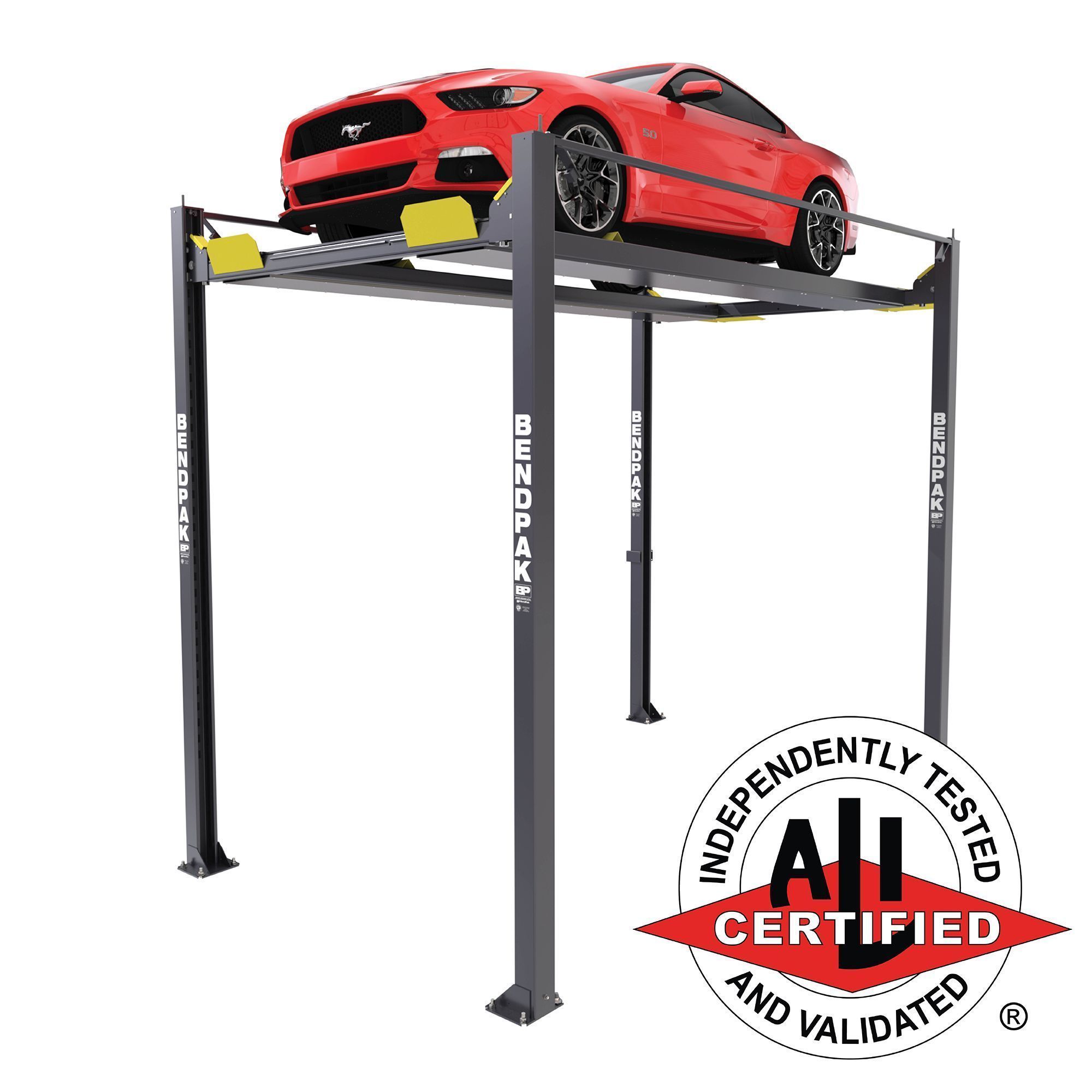
You didn't build a dream garage just to abandon it for four months every summer. The equipment doesn't care about the heat. Your BendPak lift, your Swisstrax flooring, your SafeRacks storage -- they'll all be fine. But you won't be, and that means the investment sits idle.
Cooling is the last piece of the puzzle that turns a garage from a project space you tolerate into a shop you actually want to spend time in. And if you haven't started planning your garage layout yet, check out the Dream Garage Builder to see how it all fits together.
Browse the Cool Boss CB-16L and the rest of our garage setup gear to get your space ready before summer hits.