How to Store Tires in a Garage Without Ruining Them
Somewhere in the next six weeks, the second set of wheels shows up. Maybe they came off the car at a shop, maybe they've been in the corner since April under a moving blanket. Either way there are now four wheels standing in the spot where you actually walk, and they'll stay there until spring unless you do something about it.
Most people do nothing. The tires lean against the drywall for seven months, collect brake dust, and get bumped by the trash can every Tuesday.
Then they go back on the car and nobody thinks about it again.
That works fine right up until it doesn't. A set of decent all-seasons runs $800 to $1,400, and rubber that's been stored badly doesn't announce it. It just ages faster than the tread wears, and one January you're driving on tires that have plenty of tread left and the grip of a hockey puck.
What actually ruins a tire sitting in your garage
It isn't dust. It's ozone, sunlight, and heat, in that order.
Tire rubber has antiozonants and waxes compounded into it at the factory. Driving flexes the sidewall, which pushes that protective layer out to the surface where it does its job. A tire that sits in a corner for seven months never flexes, so nothing gets replenished. The surface goes hard and the fine cracks start.
Sunlight through a garage window does the same thing faster.
And heat is the multiplier. Rubber ages roughly twice as fast for every 18 degrees Fahrenheit you add. That's why an uninsulated attic is the single worst place in the house to keep a spare set, even though it's where half the country puts them.
The worst spots in your garage are the ones you'd pick first
Anything with an electric motor makes ozone. Your furnace, the water heater blower, a chest freezer, a sump pump, the air compressor in the corner. Ozone is what cracks rubber, and a running motor puts out a steady trickle of it.
So the mechanical room corner, which is exactly where most people stack tires because nothing else fits there, is the worst spot in the building.
Pick an interior wall instead. Away from windows, away from motors, off the concrete if you can manage it. An attached garage on the house side beats a detached one, and both beat a shed.
Mounted or unmounted changes everything
This trips people up constantly.
Tires already on wheels can be stacked flat, four high, or hung from a rack. The rim carries the load, so the bead never distorts.
Bare tires with no wheel in them are a different animal. Stand those upright, like they're sitting on the road, and give them a quarter turn every month or so. Never hang a bare tire from a hook -- the whole weight of the tire pulls down on one section of bead and you'll put a permanent kink in it.
Not sure which set you've got? Look at the middle. Wheel in there, stack or hang. Nothing in there, stand it up.
Clean them first, and put the tire shine down
Brake dust is iron. It embeds in the wheel finish and sits there corroding all winter, which is how a nice set of wheels picks up a haze that never comes off. Twenty minutes with soap, water, and a wheel brush before they go into storage is worth more than any product you'll buy in the spring.
Dry them completely.
Then skip the tire dressing. Most of the cheap shine products are petroleum-based, and they pull the protective waxes right out of the rubber they're sitting on. The tire already has better chemistry inside it than anything in a spray bottle. Leave it alone.
Bag them, and don't skip this one
This is the step everyone skips, and it's the one that matters most.
Put each tire in its own bag. Large opaque lawn and leaf bags work fine, one tire per bag. Squeeze out as much air as you can, then tape the top shut.
Sealing the bag stops the oils in the rubber from evaporating over the winter, and the opaque plastic blocks whatever light gets through the garage window. It costs about four dollars for the whole set and it's the difference between tires that look new in April and tires that look four years old.
Write the corner on the bag with a marker while you're at it. Front left, front right, and so on. In seven months you will not remember, and rotation only works if you know where they came from.
Get them off the floor
Four tires on the concrete eat six to eight square feet of a garage that's already tight, and they're never in a tidy row. They sprawl. They fall over. They roll under the workbench.
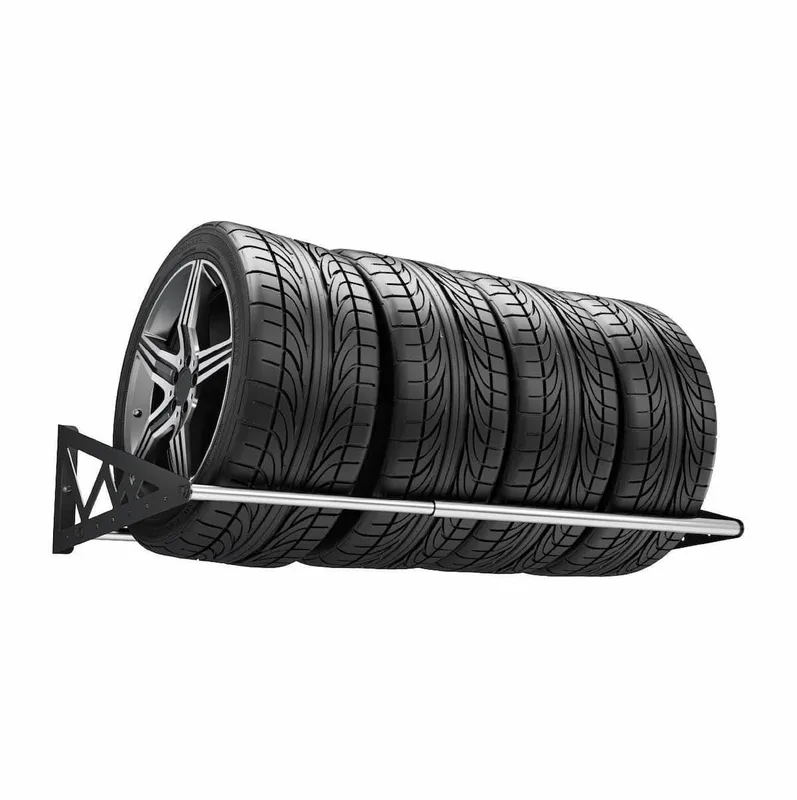
The SafeRacks Tire Rack fixes that for $74.99. It mounts to the wall, projects 27 inches, takes up 10 inches of wall width, and holds four tires up to 20 inches. That covers most passenger cars and light trucks. If you're on 22s, measure before you order.
What you get is the floor back, tires up off cold concrete where they aren't sitting in whatever melted off the car, and four wheels stored in a straight line instead of a pile. It's the cheapest upgrade in the SafeRacks lineup and pound for pound the best one.
Mount it into studs. Not drywall anchors, not toggle bolts. Four tires with wheels in them is 150 to 200 pounds hanging off your wall, and that load is entirely cantilevered.
What else goes up while you're at it
If the tires were the only thing on your garage floor, you wouldn't be reading this.
The seasonal stuff -- coolers, camp chairs, the holiday bins, the bike rack that lives on the car three weekends a year -- belongs overhead. A 4' x 8' overhead rack holds 600 pounds for $209.99 and pulls 32 square feet of clutter out of your walking space without touching a wall.
Wall shelving handles the middle tier. A 2' x 8' wall shelf with hooks runs $109.99 and keeps the things you grab weekly at chest height.
Which is where they should have been all along.
The full wall plan is in our garage wall storage ideas piece, and our overhead storage guide covers the load math and ceiling clearances if you'd rather have the whole thing drawn up before you buy anything.
Do all three in one weekend and the garage stops being a storage unit you park in front of.
The ten minutes before they go back on
Mounted tires lose about a psi a month. After seven months in the corner that's a set sitting seven or eight pounds low, and driving on that is how you cook a sidewall on the first highway trip of the season.
Check the pressure cold, before you drive anywhere.
While you're down there, find the DOT code on the sidewall. The last four digits are the week and the year, so 3221 means the 32nd week of 2021. Most manufacturers say replace at six years regardless of tread, and ten is the hard ceiling. Tires that spend half their life in storage still age on the same clock as tires that get driven every day.
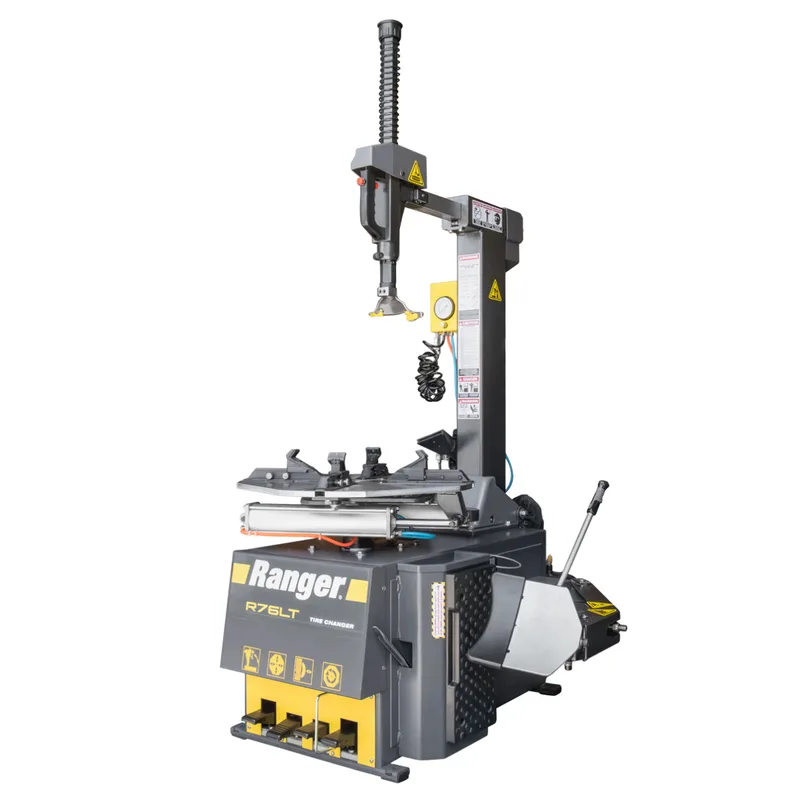
And if you're pulling wheels twice a year, every year, at some point the math on doing the swap yourself starts to work. We ran that math honestly in our piece on tire changers for the home garage, and the short version is that it pays off for fewer people than you'd think.
Put the rack up first. It's $74.99 and one afternoon, and it's the piece that makes the rest of the garage plan possible. If you want to see how it all fits before you commit, the Garage Builder lets you drop racks, lifts, and flooring into your actual dimensions and look at it.