2-Post Lift Buyer's Guide: Everything You Need to Know
The 2-post lift is the workhorse of the automotive world. It is the most common lift type in professional shops, and for good reason: it provides full 360-degree access to the underside of a vehicle with a relatively compact footprint. For home garage owners who want to do serious work on their vehicles, a 2-post lift is the single best investment you can make.
But a 2-post lift is also a significant purchase that requires careful planning. Your garage needs adequate ceiling height, strong enough concrete, the right electrical service, and enough space to work comfortably around a raised vehicle. This guide covers every detail.
How a 2-Post Lift Works
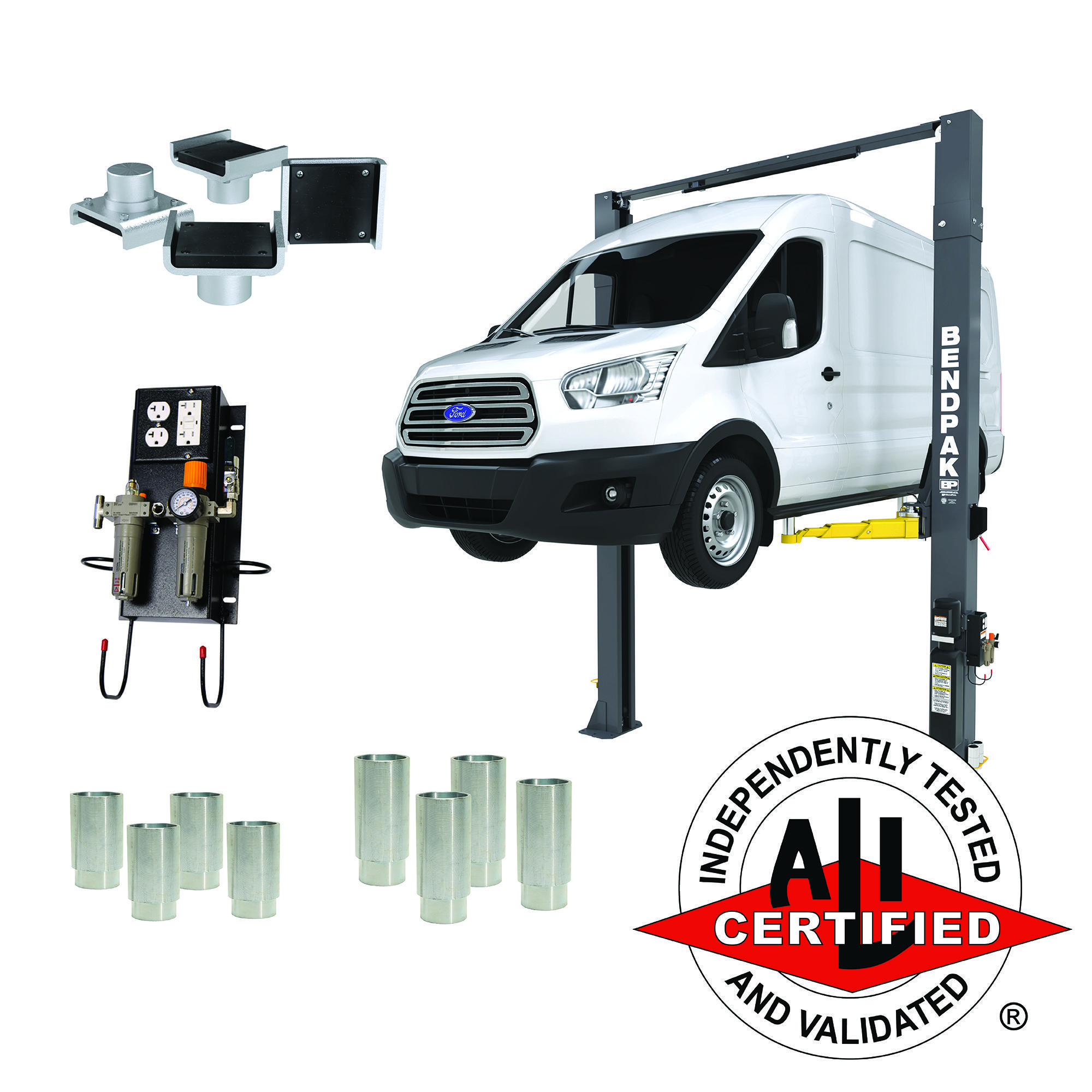
A 2-post lift consists of two vertical columns (posts) connected by an overhead beam or by underground hydraulic lines. Each column has two adjustable swing arms with rubber pads that contact the vehicle's designated lift points -- typically the frame rails, pinch welds, or manufacturer-specified jack points.
A hydraulic pump pushes fluid into cylinders inside the columns, which raise the arms via cables or chains that equalize the load between both sides. Mechanical locks engage at preset heights for safety, and the vehicle remains locked in position until you manually release the locks to lower it.
Symmetric vs. Asymmetric Design
This is one of the most important distinctions in 2-post lifts:
Symmetric lifts position the vehicle centered between the posts. The front and rear arms are the same length. This design maximizes lifting capacity but means the vehicle doors are partially blocked by the columns.
Asymmetric lifts rotate the columns about 30 degrees, positioning the vehicle slightly rearward. The front arms are shorter than the rear arms. This design gives you full door clearance and easier vehicle positioning, with a slight reduction in maximum capacity.
For home garages, asymmetric is almost always the better choice. The ability to open doors fully and walk around the front of the vehicle is worth far more than the small capacity tradeoff.
Garage Requirements Checklist
Before shopping for a 2-post lift, verify your garage meets these requirements.
Ceiling Height
This is the most common disqualifier for home garage installations. A standard 2-post lift has an overall height of 11 feet 6 inches to 12 feet. Add the height of the vehicle on the lift (typically 5 to 6 feet), and your ceiling must be high enough to accommodate both.
Minimum ceiling heights by model type:
| Lift Category | Overall Height | Minimum Ceiling |
|---|---|---|
| Standard 2-post | 11'6" - 12' | 12' - 12'6" |
| Extended-height 2-post | 14' - 15' | 15' - 16' |
| Low-profile 2-post | 10' - 11' | 10'6" - 11'6" |
The BendPak 10AP-168 series has a 168-inch (14-foot) overall height but needs about 15 feet of clearance. The HD-9 series and similar standard-height models need about 12 feet.
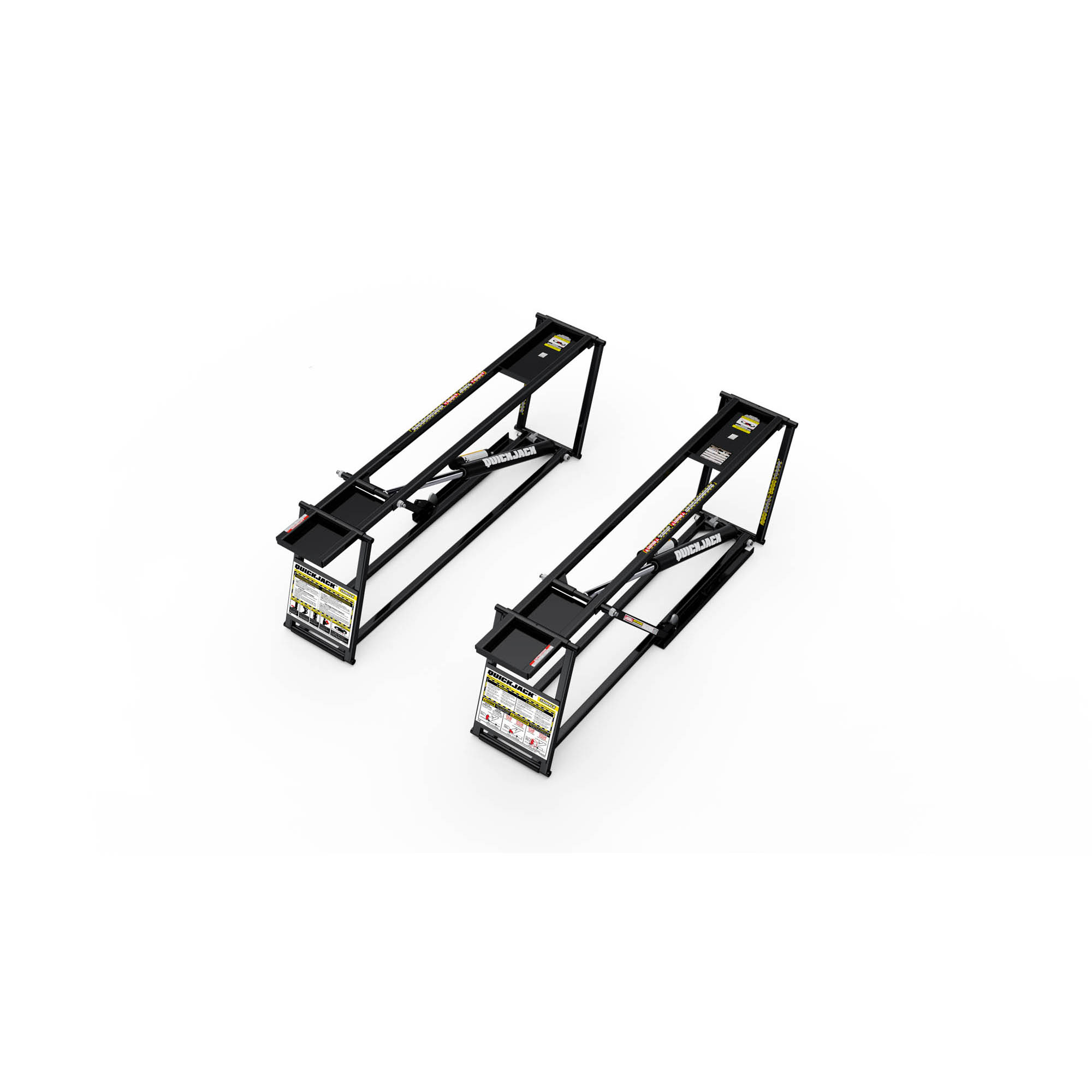
If your ceiling is under 10 feet, a 2-post lift is not practical. Consider a QuickJack portable lift or a MaxJax portable 2-post lift instead.
For a deeper analysis, read our complete ceiling height guide.
Floor Thickness and Condition
The concrete slab is what holds your lift -- and your vehicle -- safely in place. Requirements are non-negotiable:
- Minimum thickness: 4 inches of reinforced concrete for lifts up to 10,000 lbs. 6 inches for heavier lifts.
- Concrete strength: 3,000 PSI minimum. Most residential slabs poured after 1990 meet this.
- Reinforcement: Rebar or wire mesh is strongly recommended. Unreinforced concrete can crack around anchor points.
- Condition: No cracks, spalling, or deterioration within 12 inches of any anchor point.
- Moisture: Excessive moisture or water infiltration beneath the slab can weaken concrete over time.
How to check your floor thickness: Drill a small hole near where you plan to install the lift (avoid any visible rebar) and measure the depth. Alternatively, check at the edge of the slab where the concrete meets the foundation wall.
If your slab is too thin: A concrete contractor can pour a reinforced pad in the lift area. Expect $1,500 to $3,000 for a 10' x 12' reinforced pad with proper footings.
Electrical Service
Most 2-post lifts require a 220V, single-phase, 20-amp dedicated circuit. This is the same type of circuit used by electric dryers and ranges, so many homes already have the infrastructure in place. An electrician can add a dedicated 220V circuit for $200 to $500.
Some smaller-capacity lifts run on 110V, and a few high-capacity commercial models require 3-phase power (uncommon in residential settings).
Space Requirements
Beyond the lift footprint itself, you need working space around the vehicle:
- Width: The lift columns require about 10 to 12 feet of width. Add 2-3 feet on each side for walking and working around the vehicle.
- Depth: Allow the full length of your longest vehicle plus 3-4 feet in front and behind.
- Recommended minimum bay size: 12 feet wide x 24 feet deep for comfortable use.
BendPak 2-Post Lift Lineup
BendPak is the gold standard in vehicle lifts. Every BendPak lift is ALI (Automotive Lift Institute) certified, ETL safety-listed, and backed by a solid warranty. Here are the key models for home garage use.
BendPak 10APX-181
The BendPak 10APX-181 Pro Series at $8,445 is our top recommendation for home garages with adequate ceiling height.
- Capacity: 10,000 lbs
- Overall height: 181" (15'1")
- Rise height: 69"
- Design: Asymmetric
- Power: 220V single-phase
- Arms: 3-stage front, 2-stage rear
The asymmetric design, 10,000-lb capacity, and extended height make this lift versatile enough for everything from sports cars to full-size trucks. The 181-inch overall height requires about 15.5 feet of ceiling clearance.
BendPak 10AP-168
The BendPak 10AP-168 Pro Series at $7,545 is the same 10,000-lb platform in a shorter package.
- Capacity: 10,000 lbs
- Overall height: 168" (14')
- Design: Asymmetric
- Power: 220V single-phase
The 168-inch height fits in garages with about 14.5 feet of ceiling clearance. You give up some rise height compared to the 181, but the capacity and build quality are identical.
BendPak HD-9AE
The BendPak HD-9AE at $9,395 is built for heavier vehicles.
- Capacity: 9,000 lbs
- Design: Asymmetric, extra-wide
- Feature: Electric lock release
The electric lock release is a premium convenience feature. Instead of manually pulling a release lever, you press a button from the control panel. Small quality-of-life details like this matter when you use the lift regularly.
BendPak HDS-14LSXE
The BendPak HDS-14LSXE at $13,095 is the pinnacle of home garage 2-post lifts.
- Capacity: 14,000 lbs
- Design: Symmetric, extra-wide carriage
- Feature: Low-profile arms for reduced pad height
At 14,000 lbs, this lift handles one-ton dually trucks, large SUVs, and anything else you might own. The "LS" designation means a lower overall height suitable for standard commercial ceilings, and the extra-wide carriage accommodates wider vehicles.
BendPak SP-7XEF
The BendPak SP-7XEF at $10,295 is a specialty option -- a floor-plate 2-post design that requires no overhead beam.
- Capacity: 7,000 lbs
- Design: Floor-plate (no overhead connection between columns)
Floor-plate designs keep the overhead area clear, which is useful in garages with sprinkler systems, low ductwork, or other obstructions near the ceiling.
Dannmar 2-Post Lift Lineup
Dannmar is BendPak's value-oriented brand. Built in the same facilities with similar designs, Dannmar lifts offer excellent quality at lower price points by simplifying some features and using standard finishes.
Dannmar D2-10A
The Dannmar D2-10A provides 10,000 lbs of capacity in an asymmetric design. Contact us for current pricing -- Dannmar models are typically priced 15-25% below comparable BendPak units.
Dannmar D2-10C
The Dannmar D2-10C is the symmetric variant of the same 10,000-lb platform. Choose this if you need maximum capacity and do not mind the vehicle being centered between the columns.
Dannmar D2-12C
The Dannmar D2-12C steps up to 12,000 lbs for heavy truck work. This is a lot of lift for the money and a strong option for home shops that see heavy vehicles.
For a detailed brand comparison, read our guide on BendPak vs Dannmar Lifts.
Installation Process
Professional Installation
We strongly recommend professional installation for all 2-post lifts. A proper installation involves:
- Site inspection: Verify concrete thickness, condition, and electrical availability
- Layout and marking: Position the columns for optimal vehicle placement and working space
- Anchoring: Drill and set concrete anchors (or epoxy anchors for challenging conditions)
- Column assembly: Assemble and plumb the columns, install overhead beam if applicable
- Hydraulic and electrical connections: Connect pump, cylinders, hoses, and power supply
- Safety inspection: Test locks, cables, equalization, and overall function
- Training: Walkthrough of proper operation, arm positioning, and maintenance
Expect to pay $500 to $1,500 for professional installation depending on your location and the complexity of the job. This is money well spent -- an improperly installed lift is a serious safety hazard.
DIY Installation
Some experienced homeowners install their own lifts. If you go this route:
- Read the installation manual completely before starting
- Have the concrete inspected by a professional
- Use a torque wrench for all fasteners -- specifications are critical
- Have the installation inspected before first use
- Understand that self-installation may affect warranty coverage
Safety Features to Look For
A quality 2-post lift should have all of the following:
- Mechanical locks: Engage automatically at preset heights. The lift should be physically locked at every working height, not held by hydraulic pressure alone.
- Slack-cable detection: Automatically stops the lift if a cable loses tension, preventing uneven lifting.
- Equalization cables: Ensure both sides of the lift rise at the same rate.
- Rubber arm pads: Protect the vehicle's frame and lift points from damage. Replaceable when worn.
- ALI certification: The Automotive Lift Institute tests and certifies lifts for safety and performance. Always buy ALI-certified equipment.
- ETL/UL listing: Third-party safety listing for the electrical and hydraulic systems.
All BendPak and Dannmar lifts include these safety features as standard equipment.
Maintenance Schedule
A 2-post lift requires minimal but consistent maintenance:
Monthly
- Visually inspect cables for fraying or wear
- Check arm pads for damage or excessive wear
- Lubricate arm pivot points with white lithium grease
- Test mechanical locks for proper engagement
Quarterly
- Check hydraulic fluid level
- Inspect hoses and fittings for leaks
- Clean and lubricate the column rails
- Verify anchor bolts are tight
Annually
- Professional inspection of all cables, cylinders, and safety systems
- Replace hydraulic fluid per manufacturer recommendation
- Replace arm pads if worn
Total Cost Breakdown
Here is a realistic budget for a complete 2-post lift installation in a home garage:
| Item | Cost Range |
|---|---|
| Lift purchase (BendPak) | $7,545 - $13,095 |
| Lift purchase (Dannmar) | $4,500 - $8,000 |
| Professional installation | $500 - $1,500 |
| Electrical work (220V circuit) | $200 - $500 |
| Concrete reinforcement (if needed) | $1,500 - $3,000 |
| Annual maintenance supplies | $50 - $150 |
| Total (BendPak, no concrete work) | $8,245 - $15,095 |
| Total (Dannmar, no concrete work) | $5,200 - $10,000 |
Frequently Asked Questions
Can I install a 2-post lift in a standard residential garage?
It depends on your ceiling height. Most standard residential garages have 8 to 10-foot ceilings, which is too low for a full-size 2-post lift. You need at least 11.5 feet for compact models. Many homeowners with newer construction or detached garages have 12+ foot ceilings that work perfectly.
How long does a 2-post lift last?
A quality 2-post lift from BendPak or Dannmar will last 20 to 30+ years with proper maintenance. The hydraulic pump and cables may need replacement after 15-20 years of regular use, but the structural components are essentially permanent.
Does a 2-post lift add value to my home?
In most cases, yes. A properly installed, name-brand 2-post lift is an attractive feature for car enthusiasts buying a home with a shop-ready garage. However, it is not a universal selling point -- some buyers may view it as an obstacle.
Can I lift my truck on a 2-post lift?
Absolutely, as long as the lift is rated for the truck's weight. A half-ton pickup (F-150, Silverado 1500) weighs 4,500 to 5,500 lbs -- well within a 9,000 or 10,000-lb lift's range. Three-quarter and one-ton trucks (F-250, F-350) can weigh 7,000 to 10,000 lbs and need a 12,000 to 14,000-lb lift.
What about permits and inspections?
Requirements vary by jurisdiction. Some municipalities require a building permit for lift installation, particularly if electrical work is involved. Check with your local building department. Even if not required, having the installation inspected provides peace of mind.
Ready to Buy?
Browse our complete selection of BendPak 2-post lifts and Dannmar lifts. If you are not sure which model fits your garage, try our Dream Garage Builder to visualize the lift in your exact space. And if you need expert guidance, our team is here to help you choose the right lift for your vehicles, garage, and budget.